

In today’s fast-paced world, it’s easy to feel like there’s never enough time. Many professionals struggle to balance urgent demands with their long-term goals, constantly putting out fires instead of making real progress. But what if you could shift from being reactive to being proactive?
The secret lies in mastering the difference between importance and urgency.
The Upstream vs. Downstream Approach
Two men are fishing at a river, and all of a sudden they see a child in the water. They immediately jump in and rescue the child. But as soon as they do, another child comes floating down the river, and then another. They scramble frantically to rescue each child. Then, suddenly, one of the men starts climbing out of the river.
The man shouts, “Why are you leaving? You need to help me rescue these children!”
The other man replies, “I’m going upstream to stop the person who is throwing these children into the river!”
This story illustrates a crucial principle of time management: you can spend your days reacting to urgent crises, or you can focus on upstream actions that prevent those crises from happening in the first place. This is the key to taking control of your time and making meaningful progress.
The Eisenhower Matrix: A Framework for Prioritization
One of the most effective tools for managing your time is the Eisenhower Matrix, also known as the Urgency-Importance Matrix. This framework categorizes tasks into four quadrants:
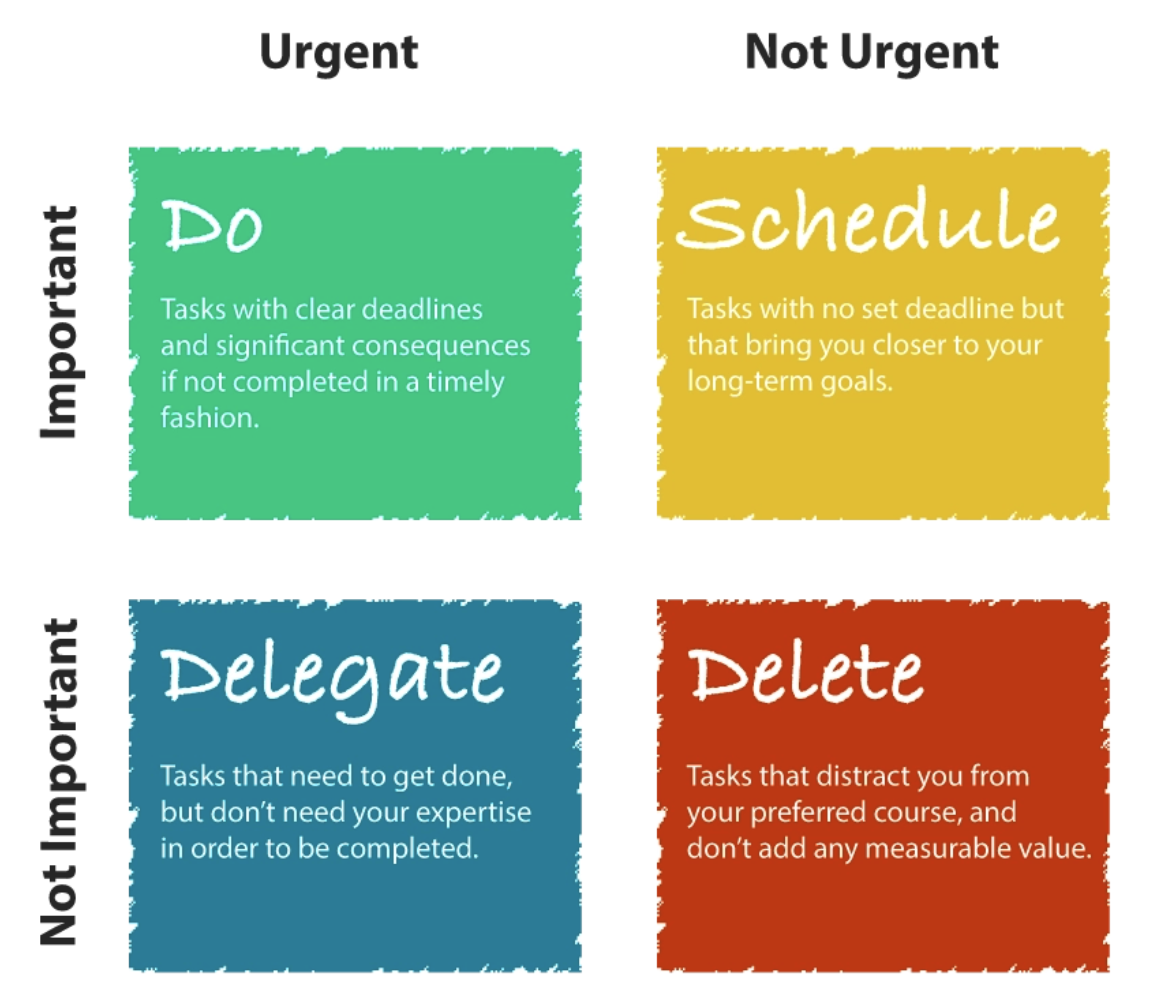
1. Quadrant 1: Urgent and Important
These are the fires, the tasks that require immediate attention and have serious consequences if ignored. They often include crises, last-minute deadlines, or pressing problems.
- Example: A critical client issue that must be resolved today.
- Strategy: Address these issues immediately, but aim to reduce their frequency by planning ahead.
2. Quadrant 2: Important but Not Urgent
These tasks contribute to your long-term success but don’t demand immediate attention. This is where strategy, growth, and real productivity happen.
- Example: Developing a business strategy, exercising, or mentoring a team member.
- Strategy: Schedule time for these tasks proactively, so they don’t become last-minute emergencies.
This quadrant is where the upstream work happens. Just like stopping the person throwing children into the river, investing time in important but not urgent activities prevents future crises. The more time you spend here, the fewer emergencies you’ll have to handle later.
3. Quadrant 3: Urgent but Not Important
These tasks feel pressing but don’t truly contribute to your long-term success. Many distractions fall into this category.
- Example: Responding to non-essential emails or attending unnecessary meetings.
- Strategy: Delegate or minimize these tasks whenever possible.
4. Quadrant 4: Neither Urgent nor Important
These tasks waste time and provide little value.
- Examples: Mindless social media scrolling, excessive TV watching, or engaging in workplace gossip.
- Strategy: Eliminate or limit these activities to maximize productivity.
Shifting from Reactive to Proactive Time Management
Most people spend their time in Quadrants 1 and 3, reacting to urgency instead of proactively managing their time. The key to long-term productivity is deliberately shifting your focus to Quadrant 2. This means taking the time to define what truly matters and making it a priority before other distractions take over.
Rather than deciding in the moment whether something is important, take a proactive approach
- Clarify Your Strategic Goals
Set aside time to reflect on what really matters. What are your most important goals in your career, business, and personal life?
- Break Goals into Actionable Steps Define the key actions required to achieve these goals. These actions should be clear, measurable, and directly linked to your long-term success.
- Schedule Time for Important Work Imagine you had a high-priority meeting with the CEO of your company. You would protect that time, show up prepared, and not allow distractions to interfere. Now, apply that same principle to your own life: schedule a meeting with the CEO of your own life: YOU. Treat the time you block for important tasks as sacred and non-negotiable.
- Regularly Review and Adjust Priorities shift over time. Make it a habit to review your progress weekly or monthly and adjust your schedule as needed. Are you making meaningful progress, or are urgent distractions pulling you away?
By taking these steps, you ensure that your time is invested in what truly matters, rather than being consumed by urgency and distractions.
In a next article, we’ll explore how to structure your weekly schedule in a way that prioritizes high-impact activities while maintaining the flexibility needed to handle unexpected challenges. Stay tuned!